Choosing a gas fire pit involves more than picking a style that looks good on your patio. You also need to think about where the fuel will come from, how much installation work your backyard needs, and what it will cost to keep the flames going.
The propane vs natural gas fire pit decision often comes down to how you plan to use your outdoor space. A propane fire pit gives you more flexibility because it doesn’t need a permanent connection to your home. Natural gas, on the other hand, provides a continuous fuel supply, making it convenient for a permanent outdoor living area.
Both options can work well, but the differences become more noticeable when you consider installation, fuel expenses, burner performance, and safety.
For homeowners in Allentown, Bethlehem, Easton, and other Lehigh Valley communities, the right choice may also depend on existing gas service and the distance between the house and the planned fire pit location.
Let’s look at what separates these two options and what you should consider before installing one.
Propane vs. Natural Gas Fire Pit: Understanding the Main Differences
The simplest difference is how each fire pit receives its fuel.
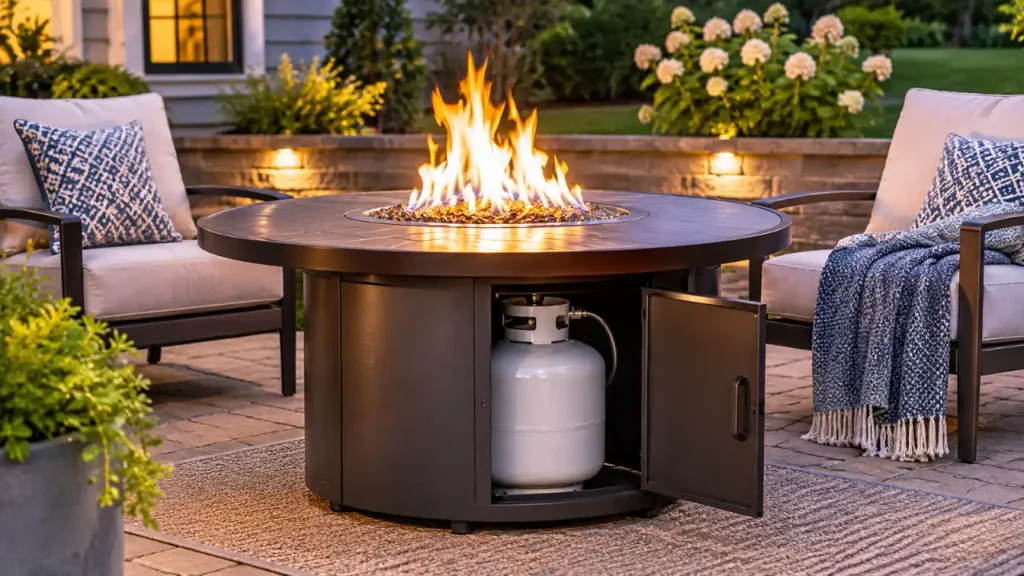
A propane fire pit uses liquid propane stored in a tank. The fuel travels through a regulator and gas connection to the burner, where it produces a flame. Depending on the design, the tank may sit inside the fire pit’s base or in a separate approved location.
A natural gas fire pit connects to your home’s natural gas supply through a dedicated gas line. Once the connection is installed, the fire pit receives fuel directly from that supply.
Here’s a quick comparison:
| Feature | Propane Fire Pit | Natural Gas Fire Pit |
|---|---|---|
| Fuel source | Propane tank | Home gas supply |
| Installation | Often simpler | Requires a gas line |
| Portability | Available in portable designs | Usually permanent |
| Fuel refills | Required | Not required |
| Ongoing expenses | Propane purchases | Utility gas consumption |
| Storage | Requires proper tank storage | No separate fuel tank |
| Best suited for | Flexible outdoor setups | Permanent outdoor spaces |
Neither fuel is automatically better. Your property’s existing setup and how frequently you use the fire pit matter more than the fuel name alone.
Propane Fire Pits: Benefits and Drawbacks
If you want an outdoor fire feature but don’t want to lay a permanent gas line, propane is a good option for homeowners.
Many portable models have a pretty basic setup. You require a compatible fire pit, an approved propane tank and the correct regulator and connections.
Why Homeowners Choose Propane
Flexible placement
A portable propane fire pit can be placed in different suitable outdoor areas. You aren’t limited by the location of a permanent gas connection.
This can be helpful when you’re still deciding how to arrange your patio furniture or want a fire feature that can move with your outdoor setup.
No natural gas connection required
Not every property has natural gas service. Propane gives homeowners another option without requiring a connection to a utility gas line.
Adjustable flame
Many propane fire pits include a control knob that lets you adjust the flame. You can lower it during a quiet evening or increase it when you want a more noticeable fire feature, provided you stay within the appliance’s operating instructions.
Different design options
Propane is available in portable bowls, fire pit tables and even unique outdoor items. Decorative fire glass and permitted lava rock can also alter the look of the flame area.
What You Should Consider Before Choosing Propane
Propane has a few practical disadvantages.
- Tank refills: You’ll need to monitor the fuel level and arrange refills or exchanges.
- Running expenses: Frequent use can make propane purchases a noticeable ongoing expense.
- Tank storage: Cylinders must be stored outdoors in an approved location, following the manufacturer’s and applicable safety requirements.
- Space requirements: A hidden tank compartment needs to be designed correctly, including the required ventilation and access.
There’s another technical detail worth knowing: propane is heavier than air. If it leaks, it can collect in low areas rather than naturally rising and dispersing. This is why proper ventilation is especially important in propane fire pit enclosures.
The exact vent size and placement must follow the appliance manufacturer’s instructions. Don’t assume that one standard vent measurement works for every design.
Natural Gas Fire Pits: Benefits and Drawbacks
Natural gas is often a practical choice for homeowners planning a permanent outdoor living area.
Instead of storing fuel in a separate tank, the fire pit connects to the home’s gas supply. Once the installation is complete, you can operate it without arranging individual fuel deliveries or tank exchanges.
Why Homeowners Choose Natural Gas
A continuous fuel supply
You don’t have to stop using your fire pit because a portable tank runs empty. As long as your home has an operating gas supply, the fire pit can receive fuel through its dedicated connection.
Convenient everyday operation
Once installed, most natural gas fire pits are easy to use. Ignite the device following the directions, adjust the flame, and enjoy your outside patio.
No separate propane tank
Without a portable cylinder, you don’t need to plan a storage area for one. This can make the finished fire pit area look cleaner, especially with custom stone or concrete designs.
Suitable for permanent outdoor features
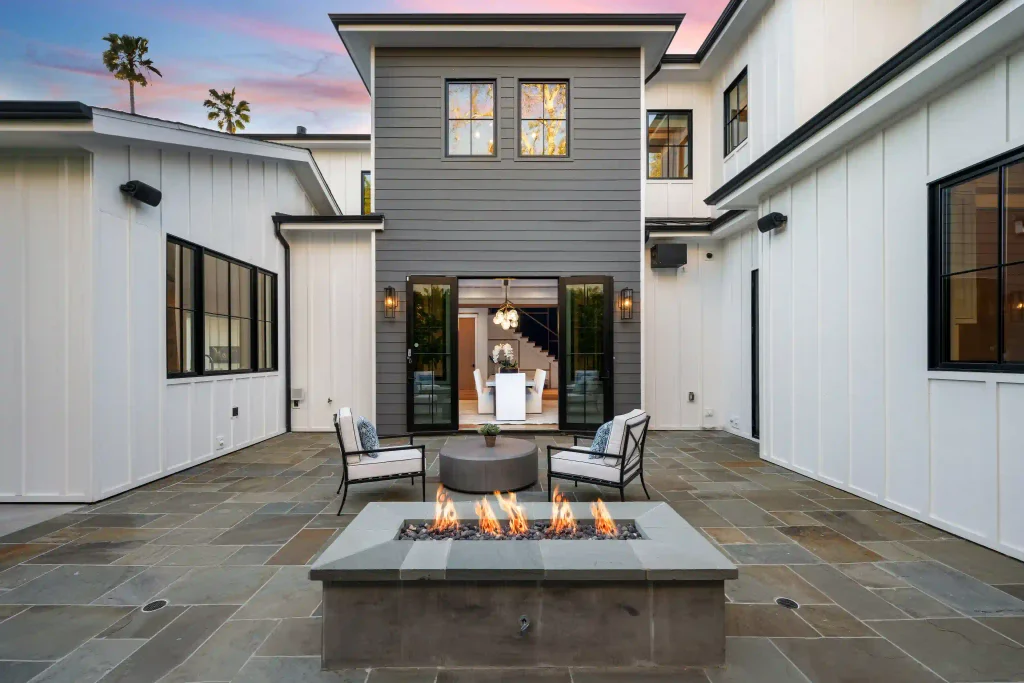
Natural gas works well in planned outdoor living spaces where the fire pit will stay in one location. It can be incorporated into a patio design alongside built-in seating, outdoor kitchens, and other permanent features.
What You Should Consider Before Choosing Natural Gas
The main drawback is installation.
If your home already has natural gas, a professional still needs to check whether the existing supply can support the additional appliance. The gas line must be properly sized for the fire pit and other connected equipment.
If a new connection is needed, installation may involve:
- Digging a trench through part of the yard.
- Installing approved gas piping.
- Adding the required shutoff valve and fittings.
- Checking gas pressure and connections.
- Testing the completed installation.
The location also becomes less flexible. Moving a permanent natural gas fire pit later may require changes to the gas line and surrounding patio.
Natural gas is not completely maintenance-free either. The burner, ignition system, gas connections, and surrounding enclosure still need regular attention.
Which Fire Pit Costs Less to Install and Operate?
Installation cost and fuel cost are two separate things. Looking at both will give you a more realistic picture of what you’ll spend.
Initial Installation Expenses
Propane often has a lower initial installation cost when you’re choosing a portable unit. There’s no need to run a new gas line from the house.
However, a custom propane fire pit can still involve considerable work. The enclosure, burner assembly, tank compartment, and ventilation all add to the project.
Natural gas usually involves more installation work, particularly when the fire pit is far from the house. Trenching, piping, fittings, and labor can increase the upfront expense.
If a suitable gas connection is already nearby, the difference may be smaller.
If you’re planning a permanent gas fire feature, professional fire pit installation services can help you choose the right setup for your backyard.
Long-Term Fuel Expenses
You buy propane separately, so cost will depend on how much refills cost and how fast the fire pit burns the fuel.
You’ll see natural gas on your usual utility statement. Depending on your local rates may be less per unit of useable heat than propane, particularly compared to portable tank exchanges.
However, you shouldn’t assume that natural gas will always save money.
Consider these factors:
- Your local propane price.
- Your natural gas utility rate.
- The fire pit’s BTU rating.
- How many hours you use it.
- The initial cost of running a gas line.
For example, someone who lights a fire pit a few weekends each summer may not use enough fuel to justify expensive permanent gas-line installation. A family that uses its outdoor living area several evenings a week may find the convenience of natural gas more valuable.
A useful tip: Ask your installer for the estimated installation cost and check local fuel prices before making your decision. Comparing the cost of the complete setup is more useful than comparing fuel prices alone.
Does Propane Produce More Heat Than Natural Gas?
This is a common question, especially for homeowners who want a fire pit that provides noticeable warmth during cooler Pennsylvania evenings.
Propane contains more energy per unit of volume than natural gas. However, that doesn’t automatically make every propane fire pit hotter.
Actual heat output depends on the burner, gas pressure, fuel supply, and appliance design.
Look at the BTU rating when comparing different models. BTU stands for British Thermal Unit, and manufacturers use BTU per hour to describe an appliance’s fuel input.
For example, a properly designed 90,000 BTU natural gas fire pit can have a higher rated input than a smaller propane model.
The burner must also be designed for the fuel being used. Propane and natural gas require different fuel delivery configurations, including appropriately sized burner orifices and pressure regulation.
Don’t try to improve the flame by changing gas connections or burner components yourself. Use only manufacturer-approved configurations.
Propane vs. Natural Gas Fire Pit: Safety Differences
Both fuels can be used safely in properly designed and installed outdoor fire pits. However, their different properties affect how the installation needs to be handled.
Propane Ventilation
Propane is heavier than air. If gas escapes inside an enclosed fire pit base, it can collect near the bottom.
That’s why propane installations need correctly positioned ventilation openings that allow leaking gas to disperse.
For a custom fire pit, ventilation should be included in the design rather than added as an afterthought.
Natural Gas Ventilation
Natural gas is lighter than air and generally rises when released. Its movement differs from propane, but that doesn’t mean a natural gas fire pit can be installed without considering ventilation.
The enclosure still needs to meet the appliance’s ventilation requirements and installation instructions.
General Fire Pit Safety
Regardless of the fuel, follow these precautions:
- Install the fire pit outdoors in an approved location.
- Maintain the clearances specified by the manufacturer.
- Keep furniture, plants, and other combustible materials away from the flame.
- Use only approved fire glass, lava rock, or decorative media.
- Have gas connections inspected and tested before operation.
- Turn off the gas supply when the fire pit isn’t in use, as instructed.
- Keep children and pets at a safe distance.
- Never leave an operating fire pit unattended.
If you smell gas, don’t attempt to light the fire pit or operate electrical switches nearby. Move away from the area and contact your gas supplier or emergency services as appropriate.
For additional information, review the propane appliance safety recommendations.
Which Option Works Better for Your Backyard Layout?
Your outdoor space can help determine which fuel makes the most sense.
A small patio with movable furniture has different requirements from a large stone entertaining area with built-in seating.
Consider these situations:
A small backyard patio: Propane may be convenient if you want a compact fire pit without permanent gas piping.
A large outdoor living area: Natural gas can be a practical option when you’re creating a permanent entertainment space and already have suitable gas service.
A property without natural gas: Propane provides an alternative fuel source without depending on utility gas availability.
A custom-built stone fire pit: Either fuel can work, provided the burner, enclosure, ventilation, and gas supply are designed for it.
A backyard that may be redesigned later: A portable propane model offers more flexibility than a fire pit connected to a permanent gas line.
Think about the complete layout before choosing. A fire pit should fit comfortably into the space without interfering with walkways, seating, landscaping, or other outdoor features.
What Should Lehigh Valley Homeowners Know Before Installation?
Outdoor fire pit installation in the Lehigh Valley requires attention to more than fuel selection.
Properties in Allentown, Bethlehem, Easton, and nearby communities can have different layouts, utility connections, and local requirements.
Before starting your project, consider the following:
Check natural gas availability. Find out whether your property has natural gas service and whether the existing system can support an additional outdoor appliance.
Plan the fire pit location. Measure the available area and consider nearby buildings, fences, trees, and overhead structures.
Think about Pennsylvania weather. Choose weather-appropriate materials and follow the manufacturer’s recommendations for protecting the burner and ignition components during periods of non-use.
Check local requirements. Permit, approval, clearance, and inspection requirements can vary by municipality. For example, Bethlehem has specific rules for gas-fueled outdoor fireplaces, including requirements for listed or certified appliances. Check the City of Bethlehem Fire Department’s outdoor fire information if your property is within city limits.
Get professional installation advice. Gas piping, connections, and burner configurations need to meet applicable codes and manufacturer specifications. Pennsylvania also has Uniform Construction Code requirements for regulated construction and gas-system work. You can review the Pennsylvania building permit guidance.
Planning these details before construction can help prevent unexpected changes once the patio or fire pit enclosure is complete.
Common Mistakes to Avoid When Choosing a Gas Fire Pit
Even a well-designed fire pit can become an expensive project when important details are overlooked.
Watch out for these mistakes:
Choosing based on the purchase price alone: A cheaper propane unit may not be the most economical choice if you use it frequently. Likewise, natural gas may not be worth the installation expense for occasional use.
Ignoring ventilation: Every custom gas fire pit needs ventilation designed for its specific fuel and appliance requirements.
Assuming both fuels use the same burner: Propane and natural gas have different operating requirements. Never connect one fuel to a burner designed for the other without an approved conversion.
Forgetting about future landscaping: Running a new gas line after installing pavers, retaining walls, or finished landscaping can create additional work.
Placing the fire pit too close to combustible materials: Always follow the manufacturer’s required clearances and applicable local rules.
A little planning before installation can prevent many of these problems.
Final Verdict: Propane or Natural Gas for Your Fire Pit?
Both options can create a comfortable and attractive outdoor gathering space. The better choice depends on your property, budget, and how you expect to use the fire pit.
Propane is a good fit when flexibility matters, natural gas isn’t available, or you want to avoid installing a permanent gas line.
Natural gas makes sense when you’re building a permanent outdoor living area, have suitable gas service, and want a continuous fuel supply without tank refills.
For Lehigh Valley homeowners, the smartest approach is to evaluate the backyard before choosing the fuel. Look at the available space, existing gas connections, installation requirements, and expected usage.
A properly planned fire pit can become a natural gathering spot for family and friends for years to come. Choosing the right fuel and getting the installation details right will help you enjoy it with greater confidence.
Frequently Asked Questions
Is propane or natural gas better for an outdoor fire pit?
Neither is the best for every property. Propane is quite versatile and can be used where there is no fixed gas connection. Natural gas is best for permanent installations as it provides a steady fuel source. It is contingent upon what you want to do with your backyard and what you will be planting in it.
Is it cheaper to run a propane or natural gas fire pit?
In some places natural gas can be cheaper to run . But the real cost depends on the rates of your local utility , the price of propane , and how much your burner uses . When comparing the two options, don’t forget to factor in the upfront cost of installing the gas line.
Can I convert my propane fire pit to natural gas?
Some propane fire pits can be converted with manufacturer-approved kits. Others are made specifically for propane. Consult the appliance documentation and ask a competent specialist if conversion may be done.
How much ventilation does a propane fire pit need?
The required ventilation will depend on the make and model of the fire pit. Propane is heavier than air therefore ventilation must facilitate the escape of leaking gas from lower parts of an enclosed foundation. Don’t assume the typical vent size will work for all installations.
Can I install a natural gas fire pit on an existing patio?
Yes, provided the location meets the appliance’s installation requirements and a suitable gas connection can be installed. However, running a new gas line may involve cutting or lifting pavers and digging through part of the yard. Planning the gas connection before completing the patio can reduce additional work.