A fire pit can turn an ordinary backyard into a comfortable place to relax, entertain guests, or spend time with family on a cool evening. But before choosing one for your outdoor space, there’s a decision worth thinking through: should you install a gas or wood-burning fire pit?
The gas vs wood fire pit debate usually comes down to convenience, cost, maintenance, appearance, and the kind of fire experience you enjoy. A gas fire pit gives you a flame without the work of handling firewood, while a wood-burning model offers the traditional crackling sound, natural aroma, and warmth of a real wood fire.
Both options can work well for homeowners in the Lehigh Valley, Pennsylvania. However, your property layout, available fuel supply, local fire regulations, and plans for using the space can influence which one makes more sense.
Let’s compare the two options so you can make a practical decision before investing in a new backyard fire feature.
Gas vs Wood Fire Pit: Understanding the Main Differences

The biggest difference is how each fire pit produces heat and how much attention it requires.
A gas fire pit uses natural gas or propane to create a controlled flame. You can usually start it with a switch, key valve, or ignition system, depending on the model. There’s no need to collect logs, build a fire, or wait for wood to catch.
A wood-burning fire pit works more traditionally. You add seasoned firewood, light it, and manage the flames as the wood burns. It takes more effort, but many homeowners enjoy the atmosphere that comes with a real wood fire.
Here’s a quick comparison:
| Feature | Gas Fire Pit | Wood-Burning Fire Pit |
|---|---|---|
| Starting the fire | Usually quick and simple | Requires kindling and firewood |
| Flame control | Adjustable on most models | Depends on the amount of wood |
| Smoke | Produces very little visible smoke | Produces smoke |
| Smell | No traditional wood-burning aroma | Natural wood-burning smell |
| Maintenance | Generally easier | Requires ash and debris removal |
| Fuel storage | Propane tank or gas connection | Requires dry firewood storage |
| Cleaning | Occasional surface cleaning | Regular ash and firebox cleaning |
| Fire atmosphere | Clean, controlled flame | Traditional crackling fire |
| Installation | May require a gas line or propane setup | Depends on the pit and its construction |
Neither option is automatically right for every backyard. Your priorities matter more than the type of fire pit itself.
1. Convenience: Which Fire Pit Is Easier to Use?
Convenience is one of the biggest reasons homeowners choose gas.
Gas Fire Pits Are Easy to Start and Control
Imagine having friends over on a Saturday evening. Everyone is sitting outside, but nobody wants to spend the next 20 minutes arranging firewood and trying to get a fire started.
With a gas fire pit, you can usually turn on the fuel supply and ignite the burner. Many models also let you adjust the flame, so you can create a smaller fire for a relaxed evening or a more noticeable flame when entertaining guests.
Gas is particularly useful when you want to use your outdoor seating area regularly without making fire preparation part of the experience.
Wood Fire Pits Require More Attention
Wood-burning fire pits take a little more work. You’ll need properly seasoned firewood, kindling, and a way to light the fire. You may also need to rearrange logs to maintain a steady flame.
Once the fire is going, someone should keep an eye on it. Wind can change the direction of smoke, and adding too much wood can make the fire larger than intended.
For homeowners who enjoy the process of building and tending a fire, this isn’t necessarily a disadvantage. It can be part of what makes the experience enjoyable.
Which is more convenient? Gas is generally easier for frequent, quick use. Wood is better suited to people who don’t mind spending time preparing and managing their fire.
2. Installation Costs and Long-Term Expenses
The initial price is only one part of your fire pit budget. You should also consider fuel, installation work, maintenance, and any additional features you want around the fire pit.
Gas Fire Pit Installation Costs
A gas fire pit may require a larger upfront investment, especially if you choose a permanent built-in design.
Your installation costs can include:
- The fire pit structure and burner system
- A natural gas connection or propane setup
- Gas piping and required fittings
- An ignition system and control valve
- Decorative fire glass, lava rock, or other approved media
- Professional installation and safety testing
If your property already has a suitable natural gas connection near the planned location, installation may be simpler. Running a new gas line across the yard can add to the project cost.
Propane models can offer more flexibility because they don’t require a permanent natural gas connection. However, you’ll need to account for tank placement, refills, and storage requirements.
Wood-Burning Fire Pit Costs
Wood-burning fire pits can be less expensive to purchase, particularly when you choose a simple steel or stone design.
A permanent masonry fire pit, however, can still involve significant construction costs. The final price depends on materials, size, site preparation, drainage, and the complexity of the surrounding patio.
You’ll also need to purchase firewood unless you have a reliable supply of suitable seasoned wood. Other possible expenses include a spark screen, fire tools, protective covers, and replacement materials.
Which Option Costs Less Over Time?
There isn’t a universal winner. A basic wood-burning pit may cost less to install, while a custom gas fire pit may require more investment upfront.
Your long-term expenses depend on how often you use the fire pit, local fuel prices, the type of installation, and maintenance needs.
Before making a decision, ask for an estimate that separates the fire pit itself from site preparation, fuel connections, materials, and labor. That gives you a more realistic picture of the total project cost.
3. Heat Output: Which One Keeps You Warmer?
Heat output matters, especially when you’re planning to use your fire pit during cooler evenings in Pennsylvania.
Gas Fire Pits
Gas fire pits produce a consistent flame, and many models allow you to adjust the heat output. This makes them useful for outdoor seating areas where you want a controlled fire without constantly adding fuel.
However, the amount of warmth you feel depends on the burner’s BTU rating, fire pit design, flame height, and distance from the seating area.
Some decorative gas fire pits are designed more for appearance than substantial heat. If warmth is a priority, discuss the burner’s heat output before choosing a model.
Wood-Burning Fire Pits
A wood-burning fire can produce substantial radiant heat, particularly when you’re using dry hardwood and maintaining a properly sized fire.
The warmth feels strongest when you’re sitting close enough to the fire. However, heat distribution can be uneven, and wind may carry warmth and smoke in different directions.
Wood fires also change as the logs burn. A strong flame at the beginning can become a bed of glowing embers later in the evening.
What should you choose? Both can provide comfortable outdoor warmth. Compare the actual heat output and design rather than assuming that one fuel type will always produce more heat.
4. Smoke, Smell, and Air Quality
Smoke is one of the biggest differences between gas and wood-burning fire pits.
A wood fire produces smoke as the logs burn. The amount depends on the wood’s moisture content, airflow, fire size, and burning conditions.
If you’ve ever sat around a fire and had smoke blowing directly into your face, you already understand why this matters. It can make an otherwise enjoyable evening uncomfortable.
To reduce smoke:
- Use properly seasoned hardwood.
- Avoid burning wet or freshly cut logs.
- Keep enough airflow between the pieces of wood.
- Don’t burn painted, treated, or construction wood.
- Avoid burning trash, cardboard, and plastic.
The EPA recommends burning dry, seasoned wood with moisture content around 20% or lower. It also explains that wood smoke contains fine particles that can affect air quality.
US EPA+2
Gas fire pits produce very little visible smoke compared with traditional wood-burning models. They also avoid the smoke and ash associated with burning logs.
This can be a practical advantage if your backyard is close to neighboring homes or you prefer a cleaner outdoor seating area.
Winner for smoke control: Gas fire pits generally have the advantage.
5. Maintenance and Cleaning Requirements
Maintenance is another factor worth considering before installation. You don’t want to spend every weekend cleaning your outdoor fire feature.
Maintaining a Gas Fire Pit
Gas fire pits are relatively easy to maintain, but they still need regular attention.
A basic maintenance routine includes:
- Removing leaves, dirt, and debris from the burner area.
- Checking the burner ports for blockages.
- Cleaning the exterior according to the manufacturer’s instructions.
- Inspecting gas connections and components for signs of damage.
- Checking decorative fire glass or lava rock for buildup.
- Having the gas system inspected when necessary.
Never attempt to repair a leaking gas connection yourself. Turn off the supply when safe to do so and contact a qualified professional.
Maintaining a Wood-Burning Fire Pit
Wood-burning models create more cleanup work because every fire leaves behind ash and partially burned material.
After the fire has completely cooled, you’ll need to remove the ashes and dispose of them safely. A metal container with a lid is a sensible choice, and it should be kept outside on a noncombustible surface.
You’ll also need to inspect the fire pit for:
- Cracks in masonry or stone.
- Rust on metal components.
- Damaged spark screens.
- Ash buildup around the firebox.
- Loose or deteriorating materials.
Which requires less maintenance? Gas generally requires less routine cleaning, while wood-burning fire pits need more attention after each use.
6. Appearance and Outdoor Living Style
Your fire pit should complement the rest of your outdoor space. Think about the patio materials, furniture, landscaping, and overall design before selecting a model.
Modern Gas Fire Pit Designs
Gas fire pits are popular in contemporary outdoor spaces because they offer clean lines and controlled flames.
Some common designs include:
- Rectangular fire tables with built-in seating arrangements.
- Square stone fire bowls.
- Linear burners surrounded by decorative fire glass.
- Custom-built fire features integrated into outdoor kitchens.
A rectangular gas fire table can work particularly well in a modern patio with sectional seating. The flame becomes part of the overall design without taking over the entire space.
Traditional Wood-Burning Designs
Wood-burning fire pits create a more rustic and natural atmosphere.
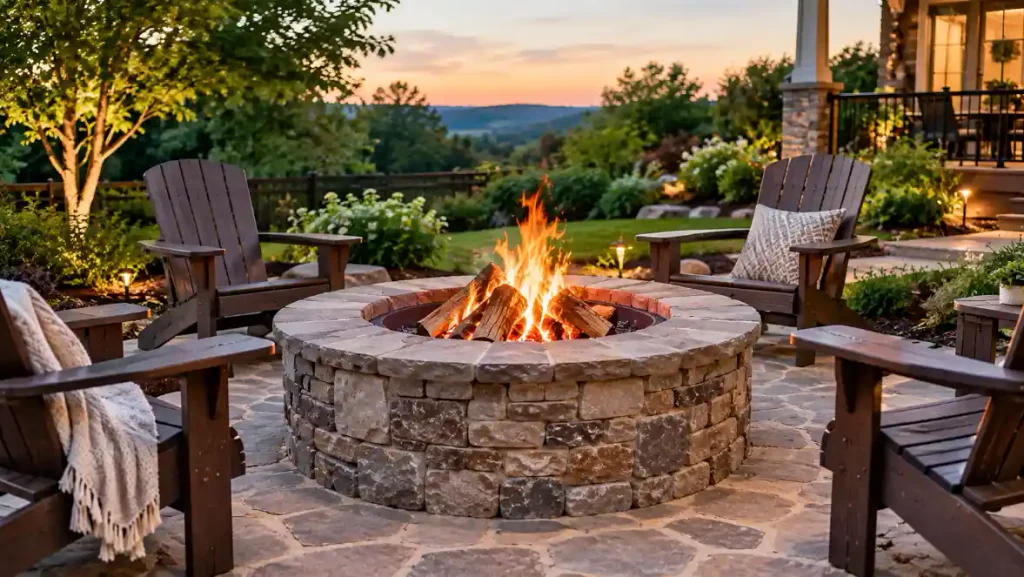
Stone circles, brick fire pits, and traditional masonry designs can look right at home in Pennsylvania backyards. They also pair well with natural landscaping, timber furniture, and outdoor gathering areas.
The sound of burning logs and the changing appearance of the flames give these fire pits a character that’s difficult to reproduce with a gas burner.
It is contingent upon the mood you choose. Your choice. Gas is better for a more regulated, modern environment, whereas wood is the classic campfire setup.
7. Safety Considerations for Pennsylvania Homeowners
Safety should be part of your decision before you purchase or install any outdoor fire feature.
Gas and wood-burning fire pits have different risks, so the installation requirements aren’t exactly the same.
Gas Fire Pit Safety
Gas systems need proper connections, ventilation, and suitable clearances from nearby combustible materials.
Keep these points in mind:
- Have permanent gas connections installed by a qualified professional.
- Follow the manufacturer’s clearance requirements.
- Use an approved burner and compatible fire media.
- Keep propane cylinders in their approved locations.
- Check connections for leaks using an appropriate method.
- Turn off the gas supply when the fire pit isn’t in use.
Never operate a gas fire pit if you suspect a leak or notice an unusual gas smell.
Wood-Burning Fire Pit Safety
Wood fires need additional precautions because sparks and embers can travel beyond the fire pit.
Keep the following practices in mind:
- Place the fire pit on a stable, noncombustible surface.
- Maintain the required distance from buildings, fences, and other combustible materials.
- Use a spark screen where appropriate.
- Keep children and pets at a safe distance.
- Never leave a burning fire unattended.
- Keep suitable extinguishing equipment nearby.
- Allow ashes to cool completely before disposal.
Pennsylvania homeowners should also check local burning rules before installation. Regulations can vary considerably between municipalities.
For example, the open-burning ordinance of the City of Bethlehem restricts solid-fuel fire pits and portable solid-fuel outdoor fireplaces, but approved propane and natural gas outdoor fireplaces are allowed subject to certification and operational restrictions.
City of Bethlehem
Pennsylvania’s DCNR also reminds residents to check with local authorities for restrictions and active burn bans.
Pennsylvania Government
This is particularly important in the Lehigh Valley, where rules in Bethlehem, Allentown, Easton, and surrounding townships may differ.
Before purchasing a wood-burning model, contact your local fire department or municipal code office to confirm what’s allowed on your property.
8. Which Fire Pit Is Better for Your Lehigh Valley Backyard?
There’s no single answer for every homeowner. The right choice depends on how you plan to use your outdoor space.
Here’s a simple way to narrow it down.
Choose a gas fire pit if:
- You want to start a fire without preparing wood.
- You prefer adjustable flames.
- You don’t want smoke blowing toward your seating area.
- You like modern outdoor living designs.
- You want less ash and debris to clean.
- You plan to use your fire pit frequently for casual gatherings.
Choose a wood-burning fire pit if:
- You enjoy the traditional campfire atmosphere.
- You like the smell and sound of burning wood.
- You don’t mind storing and handling firewood.
- You enjoy tending the fire.
- Your municipality allows the type of wood-burning fire pit you want.
There’s also a practical consideration: don’t design your fire pit area around the burner alone.
Think about where people will sit, how they’ll move around the space, where the wind usually comes from, and whether the fire pit will be used alongside an outdoor kitchen or patio.
A well-planned installation should feel like a natural part of your backyard rather than an isolated feature.
Conclusion: Gas vs Wood Fire Pit What’s the Right Choice?
When comparing a gas vs wood fire pit, the decision comes down to the experience you want and the amount of maintenance you’re comfortable handling.
Gas is easier, adjustable flames, less smoke, easier clean up. Wood burning fire pits offer a more traditional ambiance with natural flames and crackling sounds, as well as the familiar fragrance of burning logs.
For Lehigh Valley homeowners, local regulations should be part of the decision before buying anything. A design that works in one municipality may not be permitted in another.
If you’re considering a permanent backyard fire feature, professional planning and installation can help you choose suitable materials, placement, and a design that works with your outdoor space.
Frequently Asked Questions
1. Is a gas fire pit better than a wood-burning fire pit?
Usually a gas fire pit is superior for ease of use, easier upkeep and smoke management. If you are a fan of the traditional campfire experience, then a wood-burning fire pit is the way to go. Let your budget and intended use guide you, as well as local requirements.
2. Which fire pit is cheaper to operate, gas or wood?
Operating costs depend on local natural gas and propane prices, the cost of firewood, and how frequently you use the fire pit. A homeowner with an affordable local firewood supply may spend less on fuel, while someone with an existing natural gas connection may find gas more economical.
3. Do gas fire pits produce as much heat as wood fire pits?
Both can generate a lot of heat, depending on the design and the fuel output. The BTU rating of a gas fire pit helps indicate the heat production, whereas the warmth of a wood fire relies on the type and amount of wood being burned, coupled with airflow and fire size.
4. Can I install a wood-burning fire pit in my backyard in Pennsylvania?
Depends on your municipality. Some Pennsylvania localities permit some outdoor recreational fires while others restrict or prohibit solid-fuel fire pits. Before installing or using one, consult your local fire department or code enforcement office .
5. How often should I clean an outdoor fire pit?
After each wood-burning fire, remove cooled ash and debris. Gas fire pits often require occasional cleaning and inspection, including the burner and ignition components. Follow the maintenance instructions from the manufacturer for your exact model