
A fire pit can become the centerpiece of your backyard, but regular use also means exposure to heat, ash, moisture, grease, and weather. Without proper care, those things can lead to rust, clogged burners, damaged surfaces, poor airflow, and other problems that shorten the life of your fire pit.
Maintaining a fire pit effectively doesn’t have to be difficult. Your fire pit can be kept looking better and operating properly with a few easy routines after each use, as well as more thorough cleaning and inspection throughout the year.
The right maintenance routine depends on whether you have a wood-burning, propane, or natural gas fire pit. Here’s how to care for each type and what to check before you light it.
Why Fire Pit Maintenance Matters
The circumstances your fire pit operates in might be unexpectedly challenging for its components. Rain and humidity can promote corrosion, while high temperatures can cause metal to expand and compress. While gas versions can accumulate trash around burners and ignition components, wood-burning models also gather ash and soot.
Regular maintenance helps you:
- Minimize corrosion and rust
- Keep air openings and burners free.
- Avoid excessive ash accumulation
- Preserve the surrounding surfaces and the finish.
- Identify broken components before they become more serious issues.
- Keep the fire burning more consistently
- Extend the useful life of the fire pit
Maintenance is also an opportunity to catch safety issues. A cracked component, damaged gas connection, unstable base, or heavily corroded section shouldn’t simply be ignored because the fire pit still works.
Fire Pit Maintenance After Every Use
You don’t need to perform a deep cleaning every time you use your fire pit. A quick cleanup after the fire has completely gone out can make the bigger maintenance jobs much easier.
For wood-burning fire pits
Wait until the fire and remaining embers are completely cold before handling the pit. Remove loose ash and debris using a suitable shovel, brush, or ash tool.
Don’t leave a large amount of ash sitting in the bottom for weeks. Ash can hold moisture, and prolonged moisture exposure can contribute to corrosion in some fire pit materials.
Avoid using an aggressive metal instrument that could scratch the finish right away if you’re working with a thick coating of hardened residue. Buildup may typically be removed with an appropriate brush or scraper without causing surface damage.
For gas fire pits
Once the unit is completely cool, remove leaves, dirt, and other loose debris from the burner area and surrounding surfaces. Follow the manufacturer’s instructions for cleaning the burner, burner cover, fire glass, or other components.
Never poke objects into burner openings simply to clear them. A damaged burner can affect the flame pattern and create a bigger problem.
Clean the Fire Pit Regularly
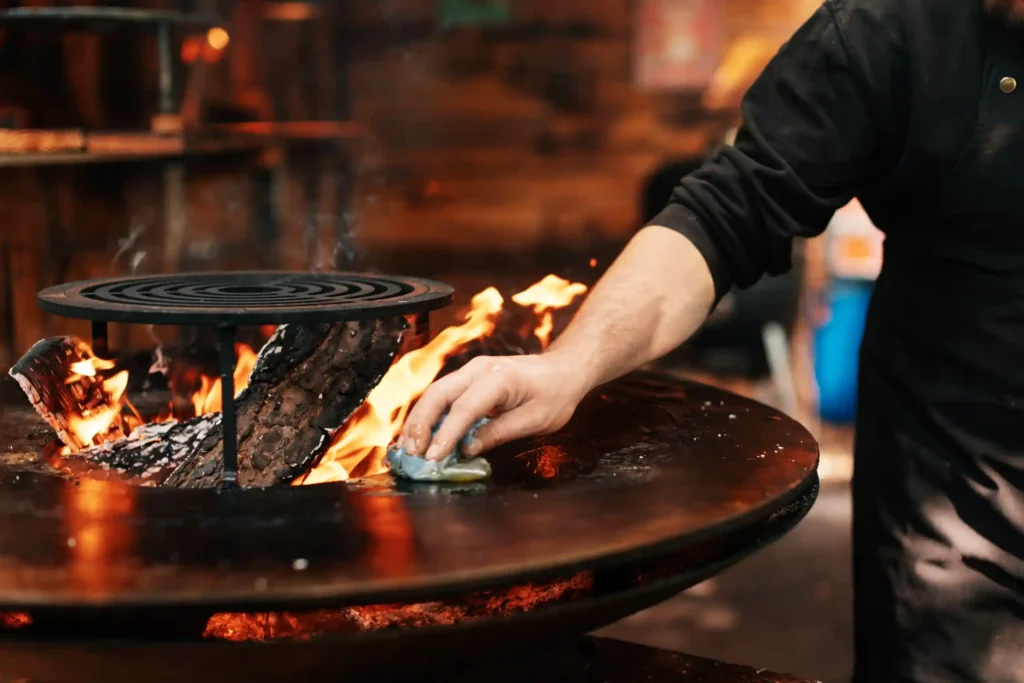
A deeper cleaning schedule depends on how often you use your fire pit and the environment around it.
| Maintenance task | Suggested frequency |
|---|---|
| Remove loose debris | After use |
| Remove excess ash | Regularly for wood-burning models |
| Wipe exterior surfaces | Every few uses or as needed |
| Inspect for rust or damage | Monthly during regular use |
| Inspect gas connections and burner area | Before regular seasonal use |
| Deep clean | At least a few times per year or as needed |
| Thorough seasonal inspection | Before heavy-use periods |
These aren’t universal manufacturer requirements. Always follow the maintenance schedule in your fire pit’s manual if it differs.
Protect Your Fire Pit From Rust and Moisture
Water is one of the biggest enemies of outdoor metal equipment.
If your fire pit isn’t designed to remain exposed to rain, use a properly fitted weather-resistant cover when it isn’t being used. Before covering it, make sure the unit is completely cool and reasonably dry.
Don’t trap standing water underneath a cover. If moisture has collected inside the fire pit, allow it to dry before covering it again.
For metal fire pits, inspect the surface regularly for small rust spots. Dealing with surface rust early is much easier than trying to restore heavily corroded metal later.
The right treatment depends on the material and finish. Check the manufacturer’s recommendations before applying paint, rust remover, oil, or another chemical product.
Maintain the Burner and Fire Glass
Gas fire pits need particular attention around the burner system.
Leaves, dust, insects, dirt, and other debris can accumulate around burner openings. Before cleaning, make sure the gas supply is turned off and the unit is completely cool.
Clean only according to the manufacturer’s instructions. Avoid modifying burner openings or using tools that could damage the components.
If your fire pit uses fire glass, inspect it periodically for pieces that are cracked, damaged, or otherwise unsuitable for continued use. Keep the glass and burner area free from excessive debris.
If you notice unusual flame behavior, such as an uneven flame pattern, repeated ignition problems, or a significant change in performance, stop using the fire pit and have the problem investigated rather than trying to improvise a repair.
Check Gas Connections Before Use
For propane and natural gas fire pits, inspect the visible hose, fittings, and connections regularly.
Look for:
- Cracks or visible deterioration
- Loose connections
- Damaged hoses
- Unusual odors
- Corrosion
- Signs of physical damage
If you smell gas, don’t continue trying to light the fire pit. Turn off the gas supply if it can be done safely, move away from the area, and follow the manufacturer’s safety instructions or contact a qualified professional.
Don’t attempt to modify the gas system yourself unless the manufacturer specifically provides instructions for that maintenance.
Inspect the Fire Pit for Damage
A quick visual inspection can prevent a small problem from becoming an expensive repair.
Check the bowl, burner area, legs, base, screen, lid, and other components for signs of damage. Pay particular attention to cracks, severe corrosion, loose hardware, warped parts, and unstable sections.
For a wood-burning fire pit, make sure the structure remains stable and that ventilation openings aren’t blocked.
For gas models, inspect the burner and visible gas components without disassembling parts that you’re not qualified or instructed to service.
If a structural or gas-related component appears damaged, don’t assume it will be fine for “just one more fire.”
Store Your Fire Pit Properly
If you’re not planning to use your fire pit for an extended period, proper storage can make a noticeable difference.
Clean it first and allow it to dry completely. Remove ash and debris, disconnect or store fuel according to the manufacturer’s instructions, and cover or store the unit in an appropriate location.
For portable models, avoid dragging the fire pit across rough surfaces. Lifting it properly can help prevent damage to legs, bases, and connections.
Keep removable accessories such as covers, screens, lids, and tools clean and dry as well.
Common Fire Pit Maintenance Mistakes
Some maintenance mistakes can cause more harm than the original problem.
Cleaning while the fire pit is still hot
Even when visible flames are gone, hot embers and surfaces can remain. Always allow the unit to cool completely before cleaning or handling components.
Using gasoline to start a fire
Never use gasoline to start or restart a fire. The U.S. Consumer Product Safety Commission specifically warns against using gasoline with backyard fire pits and recommends appropriate fire starters instead. It also recommends keeping a hose or fire extinguisher nearby.
Ignoring manufacturer instructions
Different fire pits use different materials, burners, finishes, and fuel systems. A cleaning method that’s appropriate for one model may damage another.
Leaving the fire pit uncovered
Outdoor exposure can accelerate deterioration, particularly when moisture repeatedly reaches unprotected metal components.
Trying to repair gas components without proper knowledge
Gas systems aren’t a good place for trial and error. If you’re unsure about a gas-related problem, use the manufacturer’s service guidance or a qualified professional.
When Should You Have Your Fire Pit Serviced?
DIY cleaning is enough for many routine maintenance tasks, but professional service makes sense when there’s a problem you can’t safely identify or correct.
Consider professional help if you notice:
- Persistent gas odor
- Damaged gas lines or fittings
- Serious corrosion
- Cracked structural components
- Persistent ignition problems
- Unusual burner behavior
- Significant changes in flame performance
- A fire pit that has become unstable
It’s also worth checking local fire regulations and the manufacturer’s requirements before installation, relocation, or major repairs. Fire pit rules can vary by location and fuel type.
A Simple Fire Pit Maintenance Routine
You don’t need to spend an entire weekend maintaining your fire pit.
After each use, let it cool completely and remove obvious debris. Every few uses, wipe down the exterior and check for early signs of rust or damage. During the season, inspect the burner or combustion area and clean components according to the manufacturer’s instructions.
Before a period of heavy use, perform a more thorough inspection. Look at the structure, fuel system, burner, accessories, and cover. If something doesn’t look right, deal with it before lighting the fire.
This small routine is much easier than waiting until your fire pit develops a serious problem.
Frequently Asked Questions About Fire Pit Maintenance
How often should I clean my fire pit?
Light cleaning should generally be done after use, once the fire pit is completely cool. A deeper cleaning can be performed several times a year or whenever you notice significant buildup. Your manufacturer’s maintenance instructions should take priority.
How do I prevent my fire pit from rusting?
Control moisture, clear away debris, use an appropriate cover when advised, and take care of surface rust as soon as possible. If a coating or treatment isn’t suitable with the material and finish of your fire pit, don’t apply it.
Should I cover my fire pit when it’s not being used?
Usually, a properly fitted cover can help protect an outdoor fire pit from rain, dirt, and debris. Make sure the fire pit is completely cool and dry before covering it, and follow the manufacturer’s storage instructions.
How do I clean a gas fire pit burner?
Turn off the gas supply and allow the fire pit to cool completely. Then follow the manufacturer’s specific cleaning instructions. Don’t alter burner openings or force tools into components that could be damaged.
When should I replace my fire pit instead of repairing it?
Replacement may make more sense when the structure has severe corrosion, major cracking, extensive damage, or expensive-to-replace components. For gas fire pits, serious damage to fuel-system components should be professionally assessed before the unit is used again.
Let the Experts Handle It
At FirePit Service Group, we provide professional maintenance, cleaning, and repair services for fire pits, including gas, stone, and electric models. Our team can help identify potential issues, handle necessary maintenance, and keep your fire pit operating safely and properly throughout the year.
If your fire pit needs professional attention, contact our team to discuss the right service for your needs.
Pingback: Benefits of Adding a Fire Pit to Your Outdoor Space
Pingback: 5 Outdoor Fire Pit Designs for Modern Homes