
Knowing how to turn on a gas fireplace comes down to one question: which ignition system does yours have? A wall switch or remote means electronic ignition and a one-press start. A small flame that never goes out means a standing pilot you may need to relight by hand. This guide covers both, plus what to check first and when to stop and call a pro.
What’s the fastest way to turn on a gas fireplace?
The fastest method depends on your ignition system. Electronic units start with a wall switch or remote, while standing-pilot units need the control knob set to Pilot, pressed in, and lit before you turn it to On. Whichever you have, the lighting label on the unit and your owner’s manual override any general guide, this one included.
Which type of gas fireplace do you have?
Most gas fireplaces fall into one of three setups.
| Ignition type | How to spot it | How you start it |
| Electronic ignition | Wall switch, remote or control panel. No flame burns while it’s off. | Press the switch or remote button. The igniter lights the pilot, then the main burner. |
| Standing pilot | A small flame stays lit near the burner. The knob reads Off, Pilot and On. | Press the knob, ignite the pilot, hold, then turn the knob to On. |
| Key-operated gas log set | A removable valve key in the wall or floor near the fireplace. | Hold a lit long-reach lighter at the burner, then turn the key slowly to open the gas. |
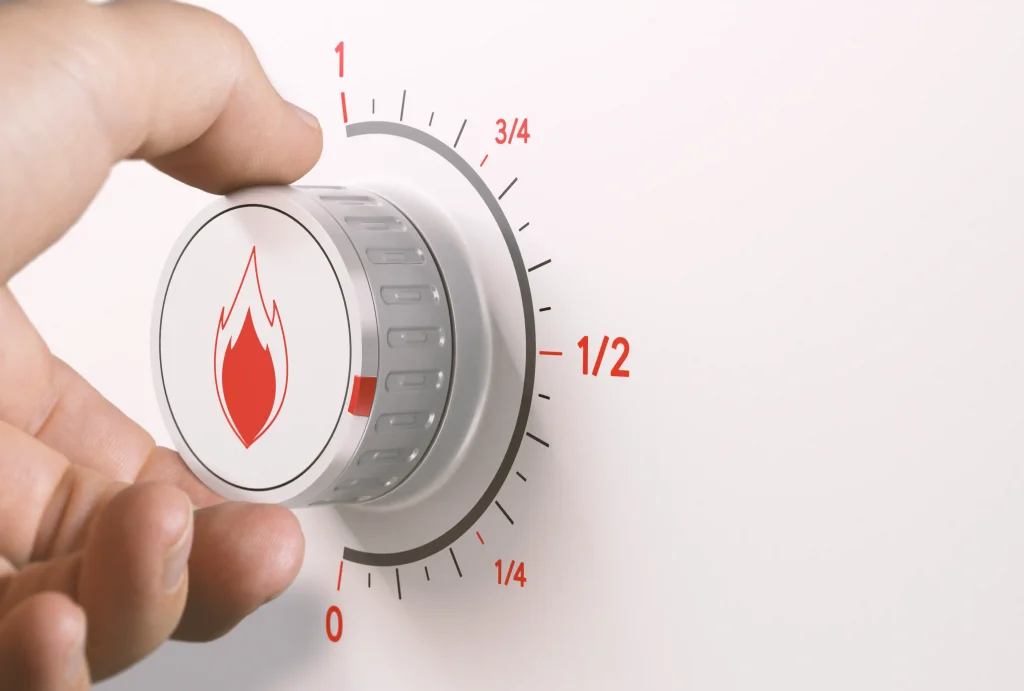
What should you check before you turn it on?
Run through these checks before the first fire of the season and any time the unit has been off for a while.
- Smell for gas. If you notice a rotten-egg odor, don’t light anything or flip any switches. Leave the house and call your gas utility’s emergency line or 911 from outside.
- Read the lighting label. It sits on the unit or inside the control panel and lists the steps and hold times for your model.
- Check the gas shutoff valve. The handle should sit in line with the pipe, which means open.
- Open the damper if you have a gas log set in a masonry fireplace. Vented logs need it fully open. Sealed direct-vent units have no damper.
- Clear the area. Keep rugs, curtains, paper and décor back from the opening as far as your manual specifies.
How to turn on a gas fireplace with a switch or remote
Set the wall control or remote to On and give it a few seconds. Electronic ignition lights a small pilot first, then opens the main burner.
- Make sure the gas shutoff valve is open and the unit’s power switch, if it has one, is on.
- Press the wall switch or the remote’s power button. In thermostat mode, set the temperature above room temperature.
- Listen for clicking. That’s the igniter.
What if the remote does nothing?
Check batteries first, in both the remote and the receiver box. Some units also have a backup battery pack, and a dead one can stop the whole system. Still nothing? Confirm the wall switch is on and the gas valve is open.
How to light a standing pilot gas fireplace
Turn the knob to Off and wait five minutes, set it to Pilot, press and hold it while you ignite the pilot, keep holding for the time your manual lists, then turn the knob to On.
- Turn the control knob to Off and wait at least five minutes so any gas in the firebox clears. Sniff the area, and stop if you smell gas.
- Open or remove the control panel cover so you can see the burner and pilot.
- Turn the knob to Pilot.
- Press the knob in and hold it. This sends gas to the pilot.
- Press the igniter button repeatedly until the pilot flame appears. If there’s no igniter, hold a long-reach lighter at the pilot the way your manual directs.
- Keep holding the knob. Hold times run from about 15 seconds to a minute depending on the unit. That wait heats the thermocouple, the safety device that tells the gas valve the pilot is lit.
- Release the knob slowly. If the pilot stays lit, you’re set. If it goes out, wait five more minutes and start over.
- Turn the knob to On, then use the switch, thermostat or remote to light the main burner.
Tip: on many valves the knob won’t turn from Pilot to Off unless you press it in slightly. Don’t force it.
What if the pilot won’t stay lit?
Try once more, holding the knob a little longer. If the pilot dies again, stop. That usually points to a worn thermocouple or a dirty pilot assembly, both quick fixes for a technician.
Why won’t your gas fireplace turn on?
Most no-start problems trace back to batteries, a closed gas valve or a pilot that isn’t heating the thermocouple.
| What you see | Likely cause | What to try |
| Remote or switch does nothing | Dead batteries in the remote or receiver, switch off, or thermostat set too low | Replace batteries, confirm the switch is on, raise the temperature setting. |
| Pilot dies when you release the knob | Thermocouple not heating long enough, or worn out | Relight and hold the knob longer, within your manual’s limit. If it fails again, call a technician. |
| Igniter clicks but nothing lights | Closed gas valve, dirty pilot assembly or failing igniter | Check the shutoff valve. If it’s open, stop clicking and call for service. |
| Pilot is lit but the main burner won’t start | Switch, remote or thermostat issue, or a faulty gas valve | Check batteries and settings. A bad valve is a job for a pro. |
| Soot on the glass or logs, or a lazy yellow flame that’s new | Dirty burner, blocked venting or poor combustion | Turn it off and schedule an inspection. |
Our rule of thumb is two honest attempts, then stop. Each failed try releases more gas into the firebox, and a pilot that won’t stay lit is a warning sign.
Does Pennsylvania require a carbon monoxide alarm near a gas fireplace?
For rentals and home sales, yes. Pennsylvania’s Carbon Monoxide Alarm Standards Act (Act 121 of 2013, 35 P.S. § 7224 and following) requires owners of rental dwellings with a fossil fuel-burning heater, fireplace or attached garage to provide an approved carbon monoxide alarm near the bedrooms and the appliance. Sellers of residential buildings must disclose whether carbon monoxide detectors are installed.
The Act also lets municipalities adopt equal or stricter rules, so check with your township or borough. Legal minimums aside, any home that burns gas indoors should have a working alarm near the fireplace and the bedrooms. Test it monthly. This is general information, not legal advice.
When should you call a fireplace professional?
Call a technician if you smell gas, the pilot won’t stay lit after two tries, the burner lights with a delayed “whoomp,” soot is building up or the glass is cracked. Each of those points to worn parts, blocked venting or a gas supply problem that isn’t safe to DIY.
FirePit Service Group provides fireplace repair, maintenance and installation for homeowners across the Lehigh Valley, Pennsylvania, along with fire pit services and outdoor living enhancements. Many manufacturers call for a professional inspection once a year, and a pre-season tune-up catches a weak thermocouple before the first cold night.
Common questions about turning on a gas fireplace
Is it safe to light a gas fireplace yourself?
Yes, as long as the unit is in good working order and you follow the manufacturer’s instructions. Don’t light it if you smell gas or if the pilot has failed repeatedly. Have a technician check it first.
How long do you hold the knob when lighting a pilot?
Most manuals call for 15 seconds to a minute after the pilot lights, so the thermocouple can heat up and keep the gas valve open. Use the time printed in yours and release the knob slowly.
Do you need to open the damper to turn on a gas fireplace?
Only for a gas log set in a masonry fireplace. Vented logs need the damper fully open so exhaust can escape, so follow the log maker’s instructions. Sealed direct-vent fireplaces have no damper.
How often should a gas fireplace be serviced?
Many manufacturers recommend a professional inspection once a year, ideally before heating season, and your owner’s manual lists the schedule for your model. In the Lehigh Valley, FirePit Service Group can handle annual gas fireplace maintenance before the cold weather arrives.
Ready to get your fireplace running safely?
Once you know your ignition type and follow the label, lighting a gas fireplace is a short job. If yours won’t cooperate, skip the third attempt. FirePit Service Group can diagnose and repair your fireplace anywhere in the Lehigh Valley. Request service at firepitservice.com.